Description
Mindful Connections is an interactive art installation that visualizes group heart-rate synchrony in real time, created for a mindfulness retreat. Research has shown that when people are close together, at ease, and sharing attention, the natural fluctuations in their heart rates begin to align. The installation makes that invisible connection visible: a living portrait of the room, drawn by its own heartbeats.
Each participant wears an armband heart-rate monitor. The system learns each person’s resting baseline, then continuously measures how strongly every pair of hearts is moving together, along with a single score for how in-sync the whole group is.
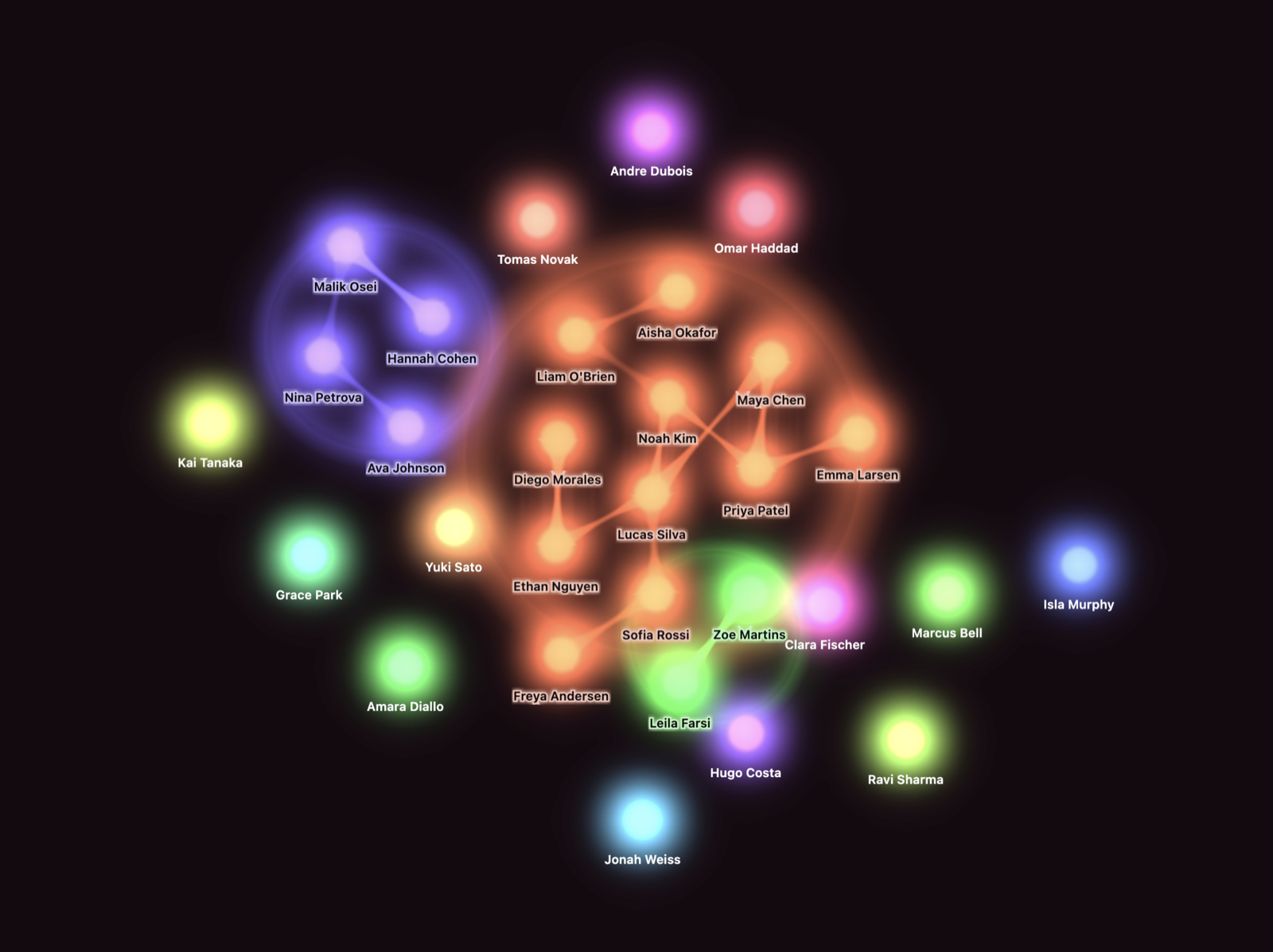
The Visualization
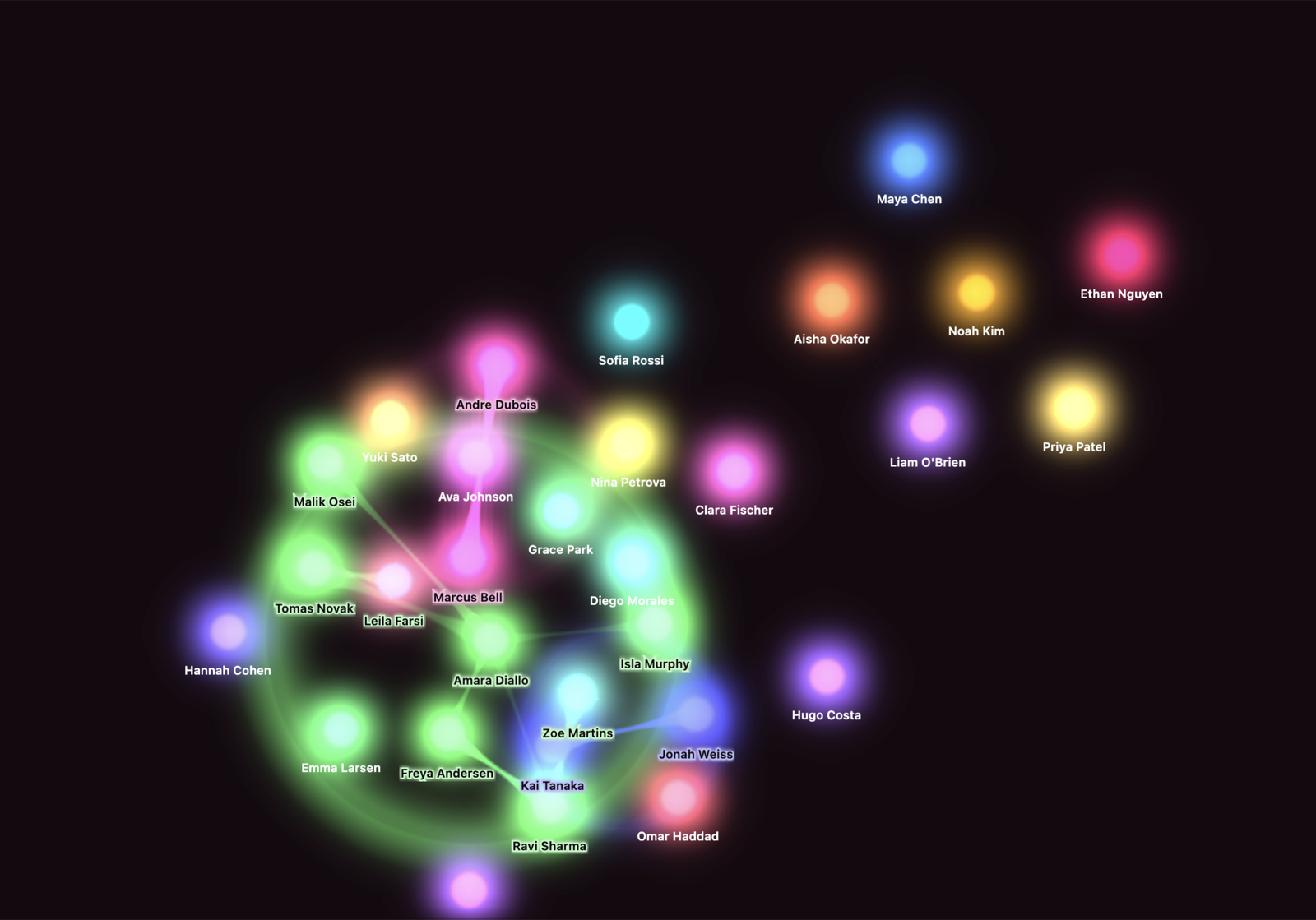
On a large screen, every person appears as their own glowing glyph. Hearts that fall into rhythm drift together and clump into clusters wrapped in a shared glow; hearts moving independently hold their distance. Each beat lands as a soft pulse. Over a session the room watches itself settle: as the group breathes together, the scattered constellation gathers.
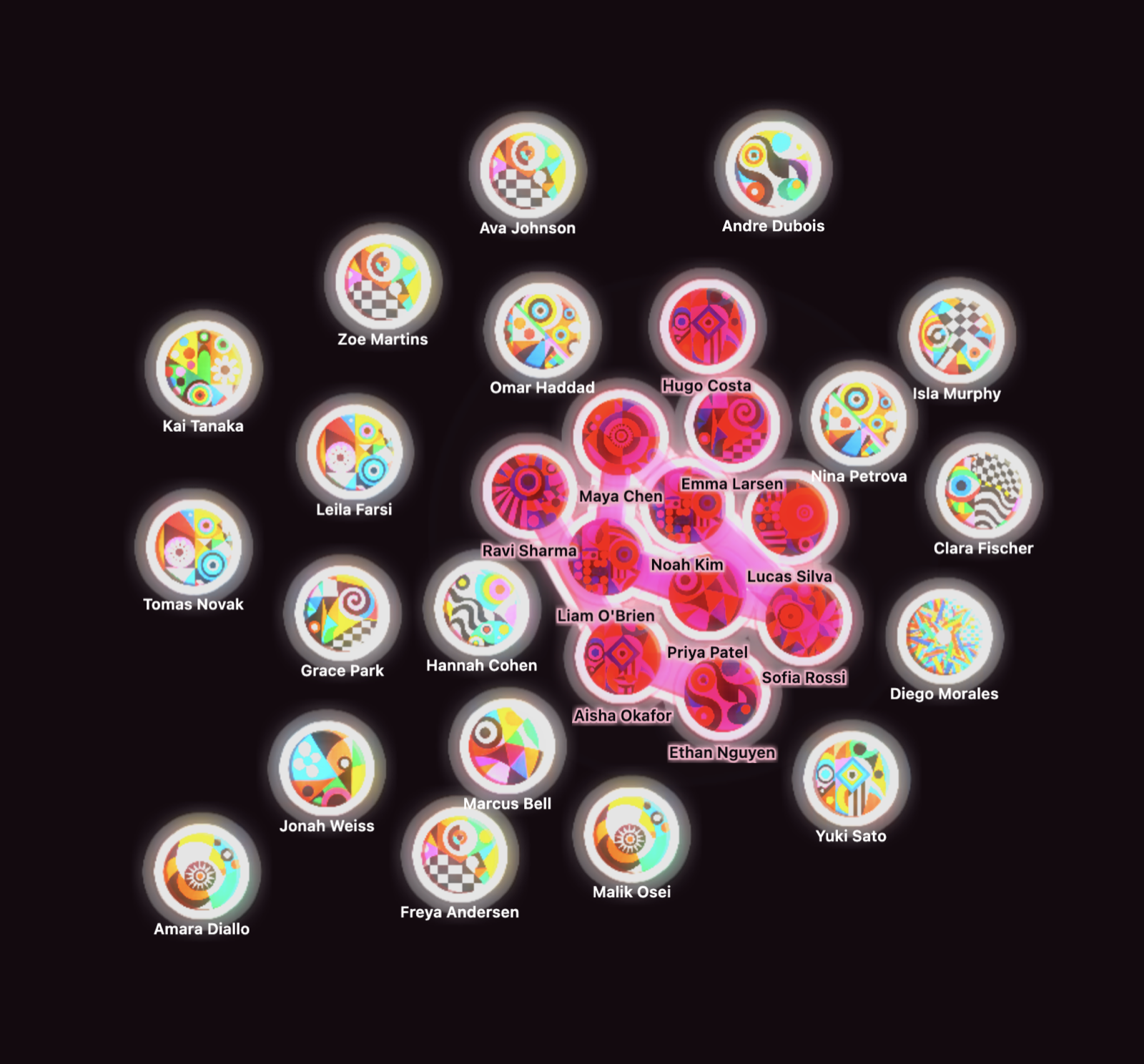
The front end is a PixiJS rendering engine with physics-driven clustering, particle and glow effects tied to live events (heartbeats, people joining, groups forming), and a preset system for dialing in different looks for the space. The same live data can render as soft orbs, night-sky constellations, or kaleidoscopic mandala tiles.
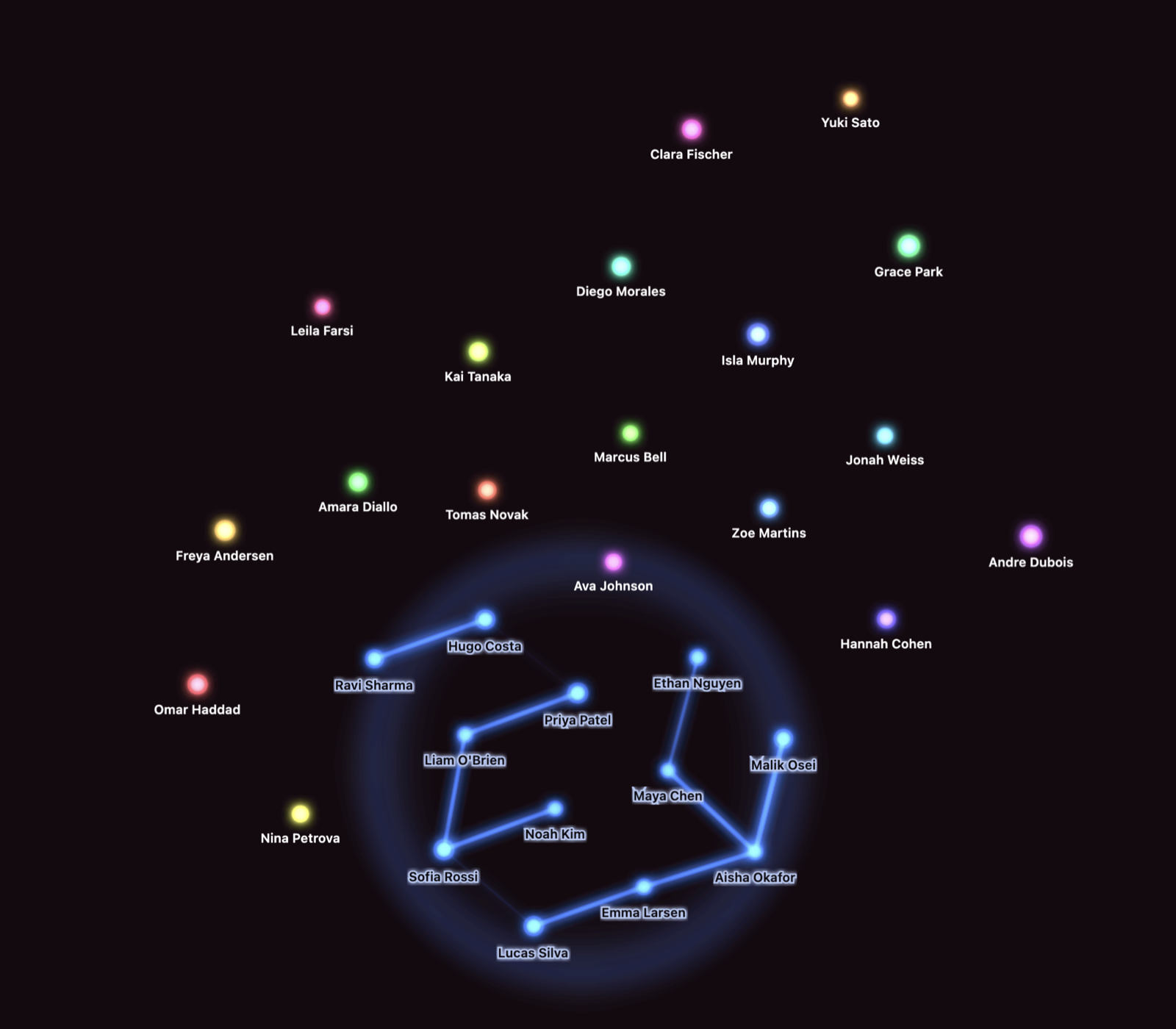
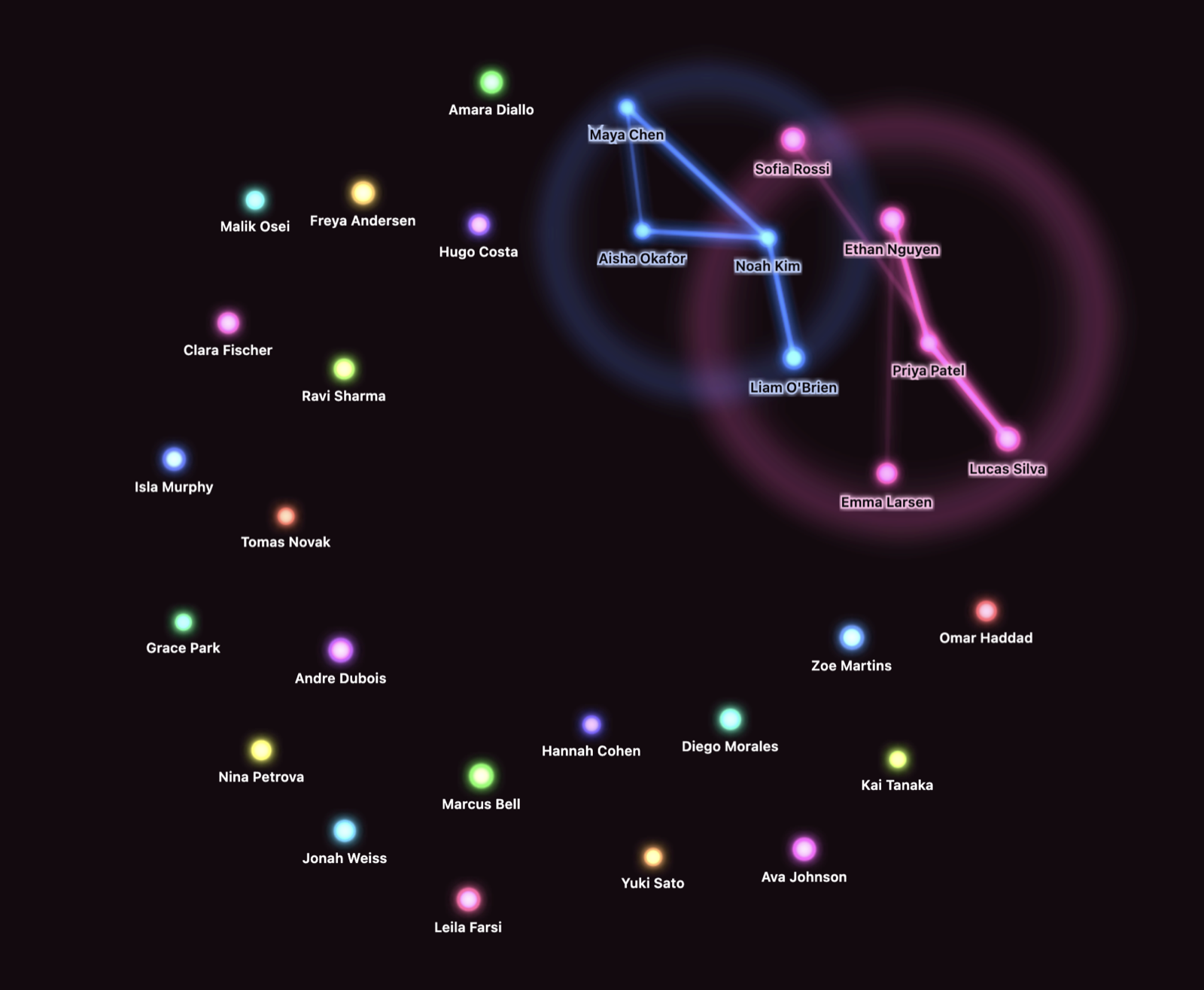
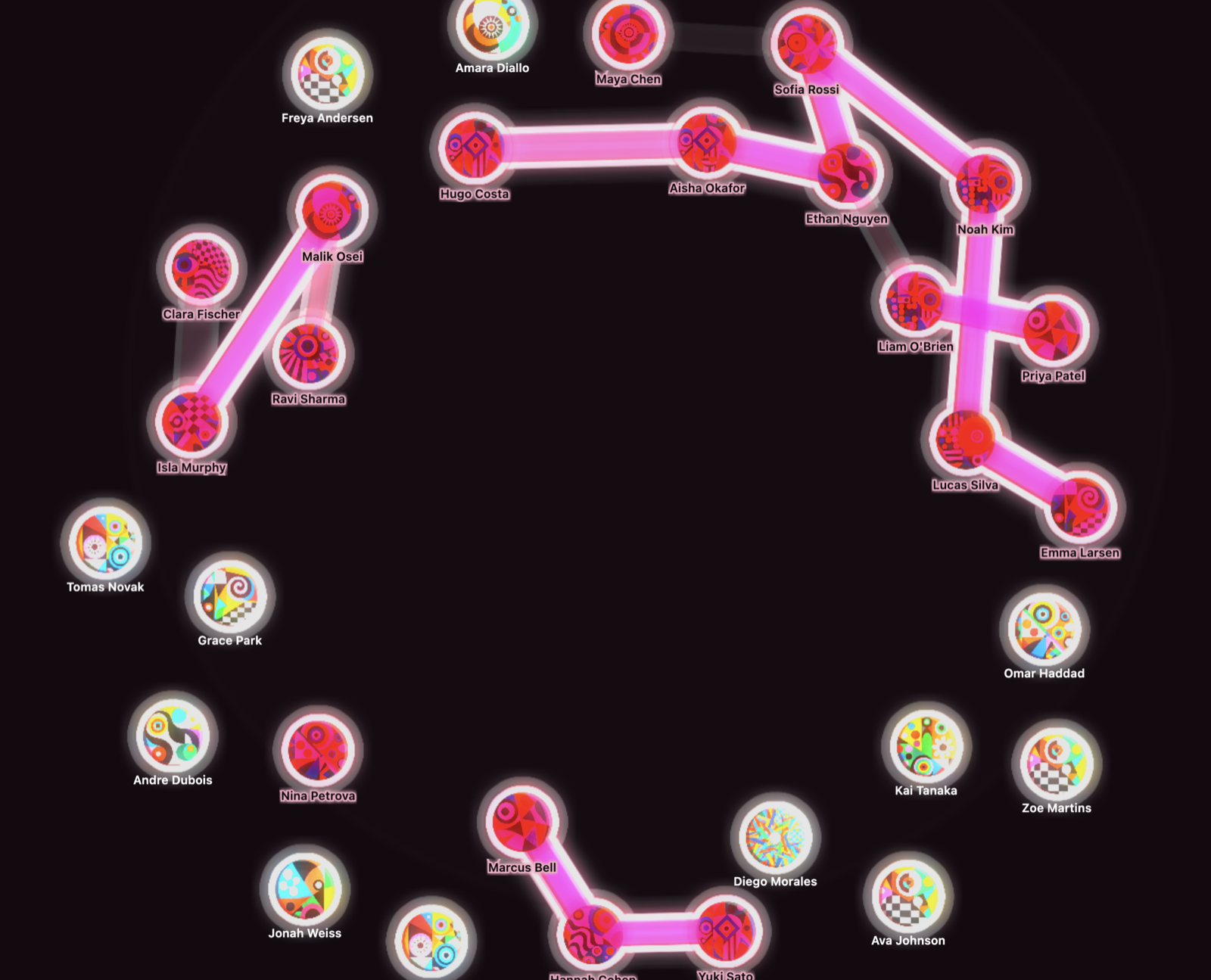
When two sub-groups sync separately, each forms its own ringed constellation. In the mandala look, every person gets a one-of-a-kind kaleidoscopic tile, and tiles flush red and link up as their hearts lock together.
Process
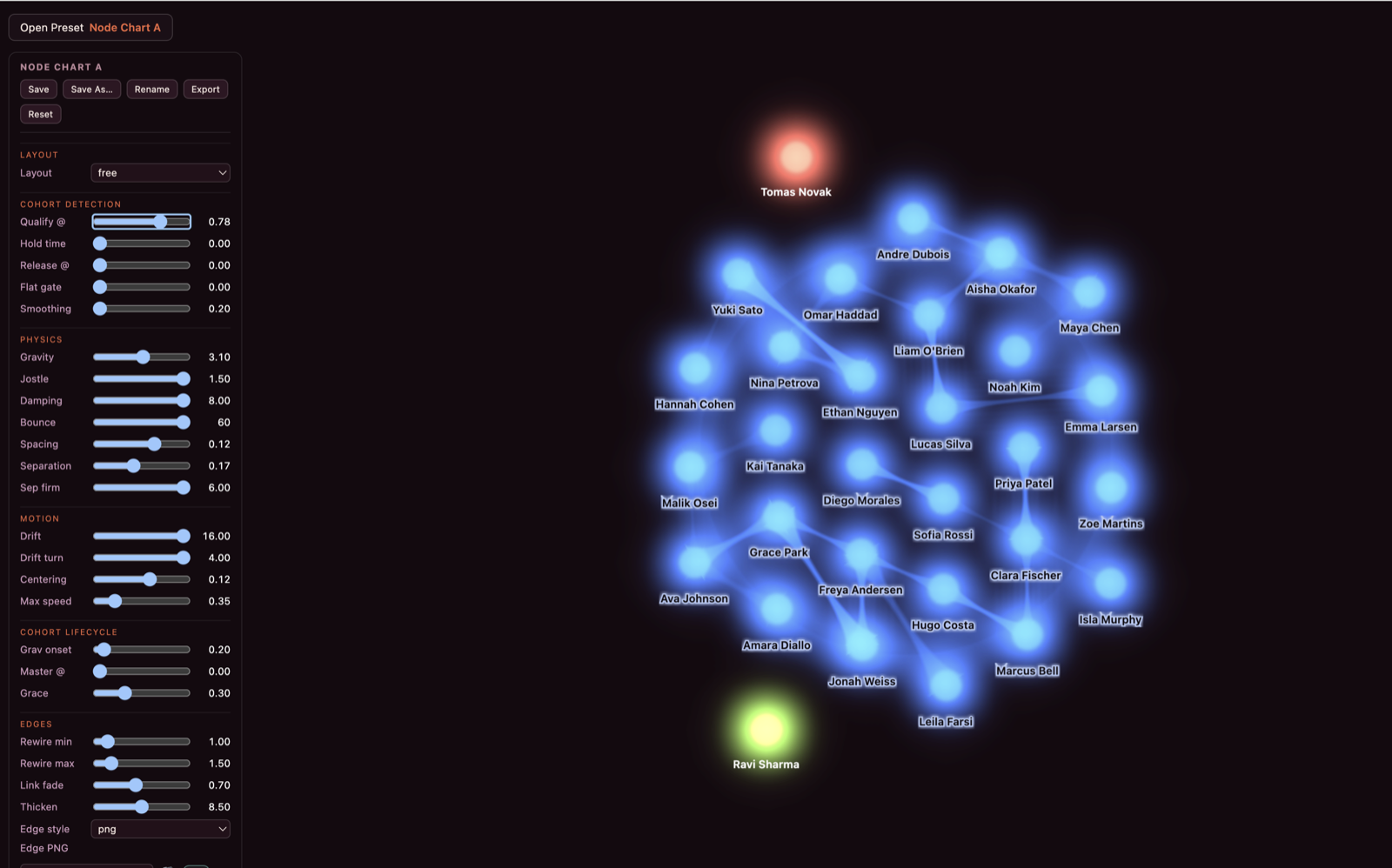
A built-in simulator with scenarios like “drift into sync” and “guided breathing pacer” made it possible to design and rehearse the piece without a room full of people (the sessions pictured here are simulator runs, which is why the participants have such tidy names). A live control panel exposes the physics of the piece: cohort detection thresholds, gravity, damping, drift, and edge styles, all saveable as presets.
Behind the display is a second, technical screen for running the installation: connecting bands, calibrating each person, watching signal quality, and rotating a limited set of bands through many participants without anyone losing their place. The first version supports a small group connected directly to a laptop; custom ESP32 wireless gateways extend it toward thirty participants.
Credits
Concept by Jo Ziady. Core system (signal processing, backend, and gateway firmware) by Bash Ziady. Visualization and front end by Ben Sutherland.