My son Ryker needed a science project, and he wanted to do something with electronics. We landed on a
magnetic field detector, a thing you wave near magnets to see how strong they are. The output is a
rainbow bargraph of LEDs that lights up further and further to the right as the field gets stronger.
The build
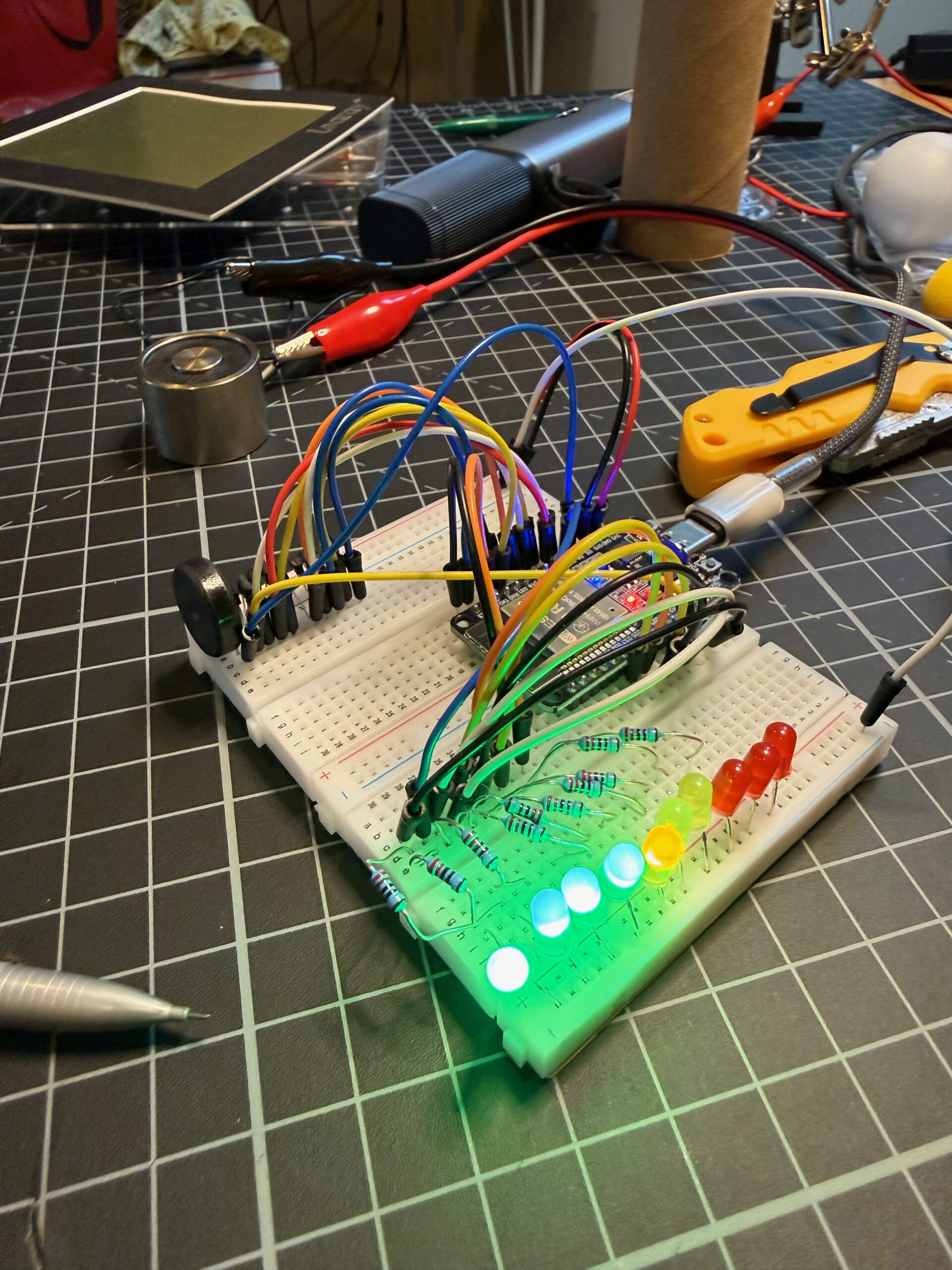
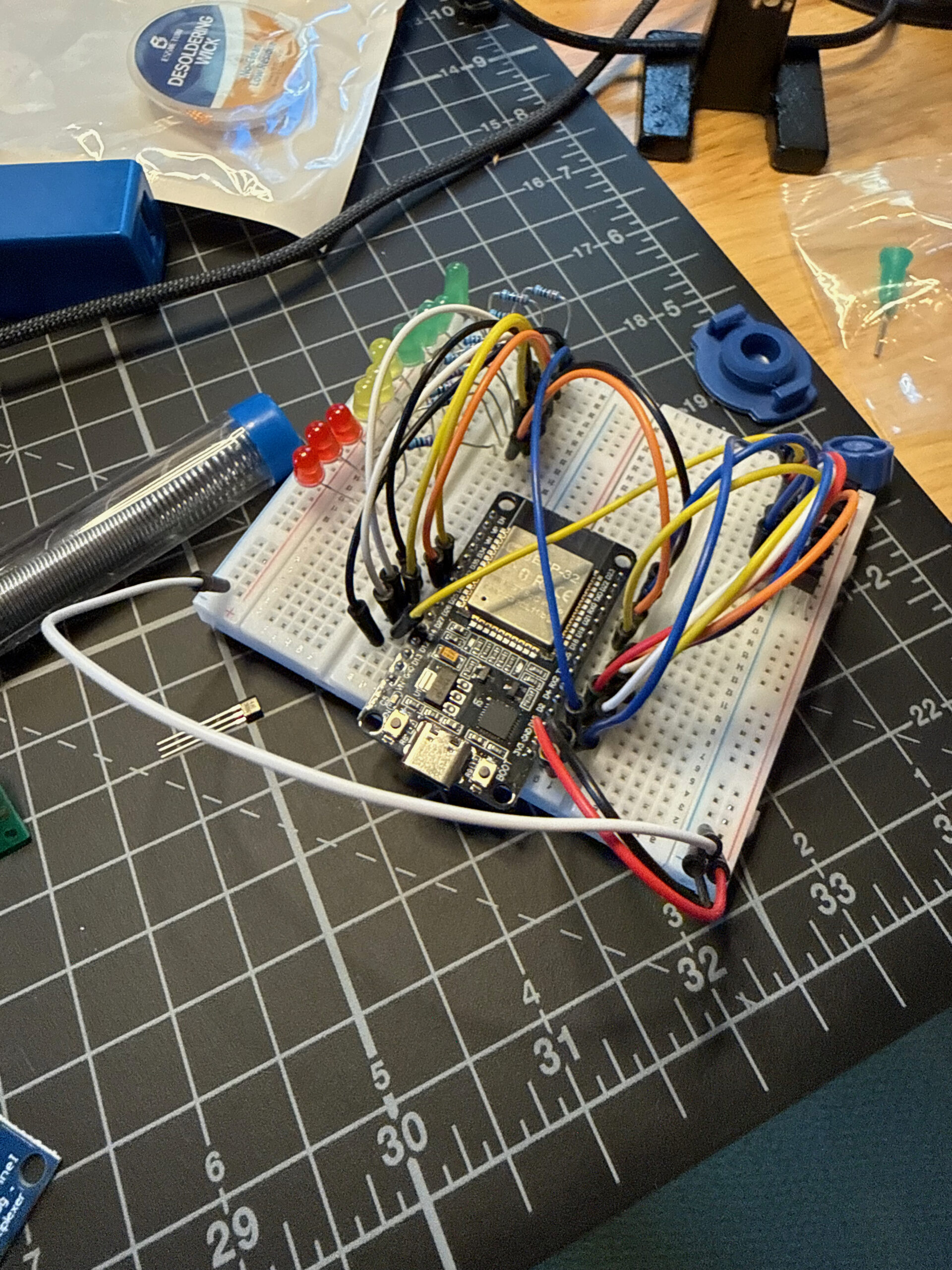
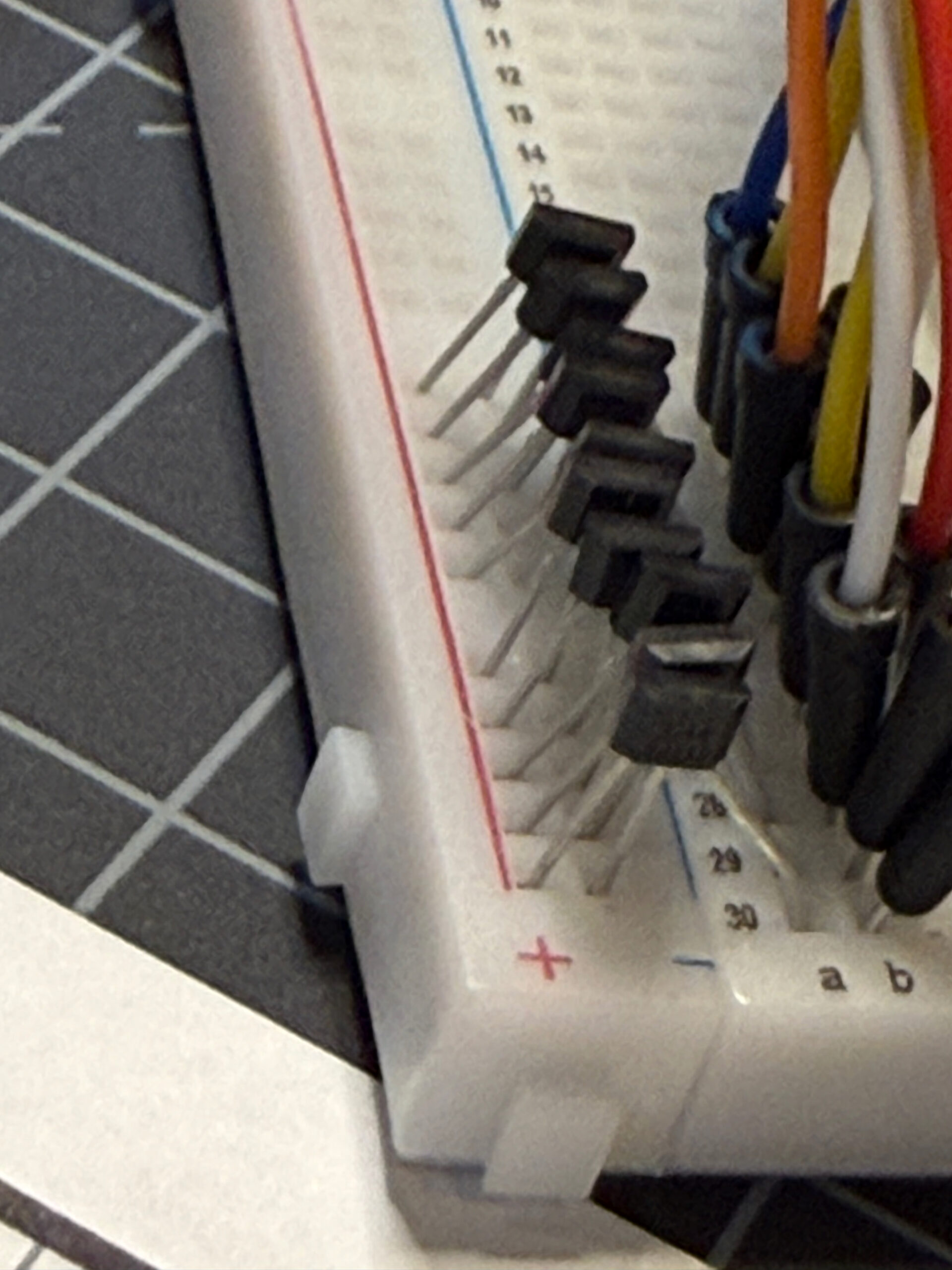
An ESP32 microcontroller reads a hall-effect sensor, maps the value to a level on the bargraph, and lights
the LEDs left-to-right. Eight LEDs (green → yellow → red) with matching current-limiting resistors,
all on a breadboard so Ryker could see exactly what was wired to what.
Testing
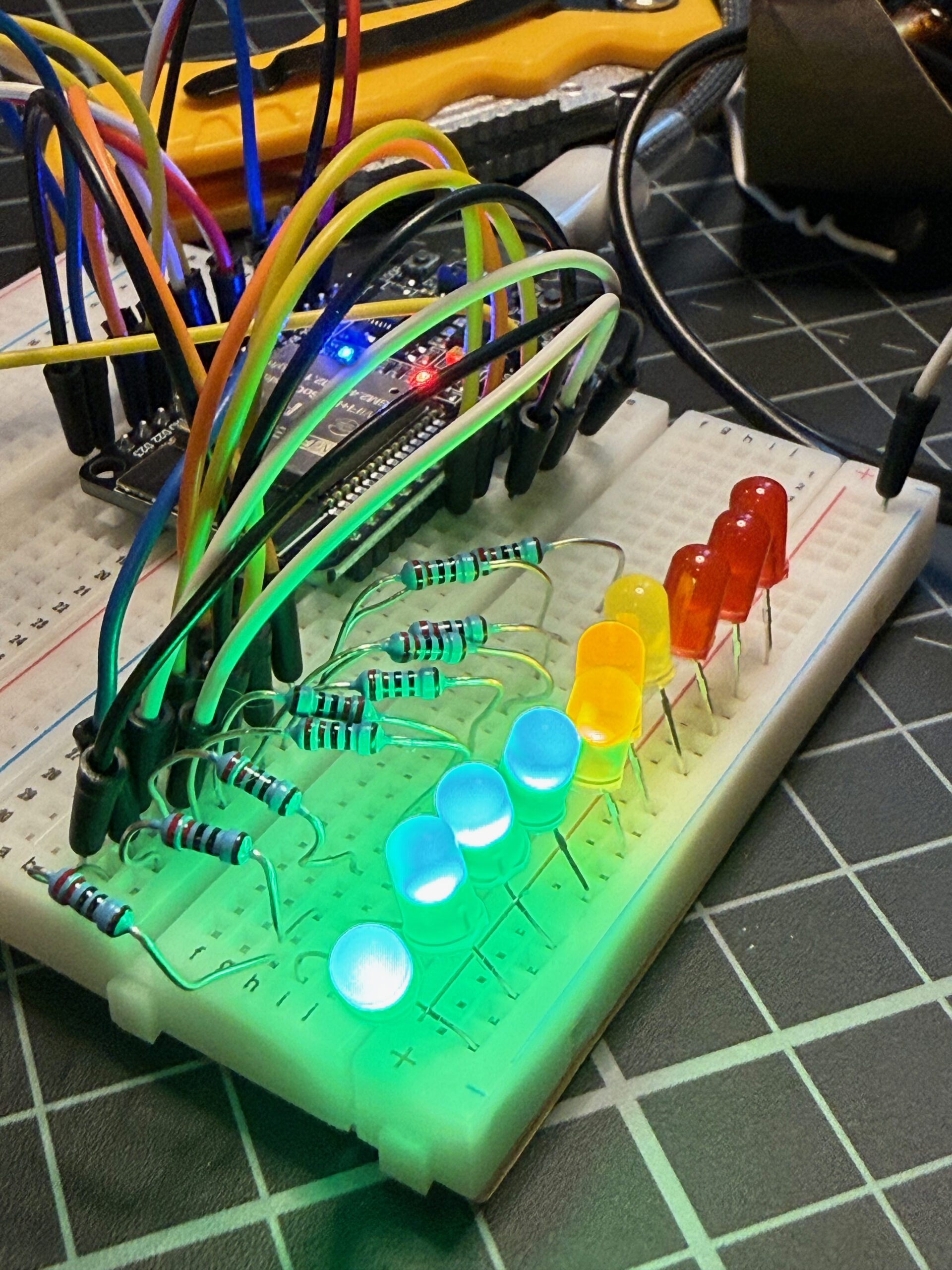
The fun part, bringing different magnets near the sensor and watching the bar fill.
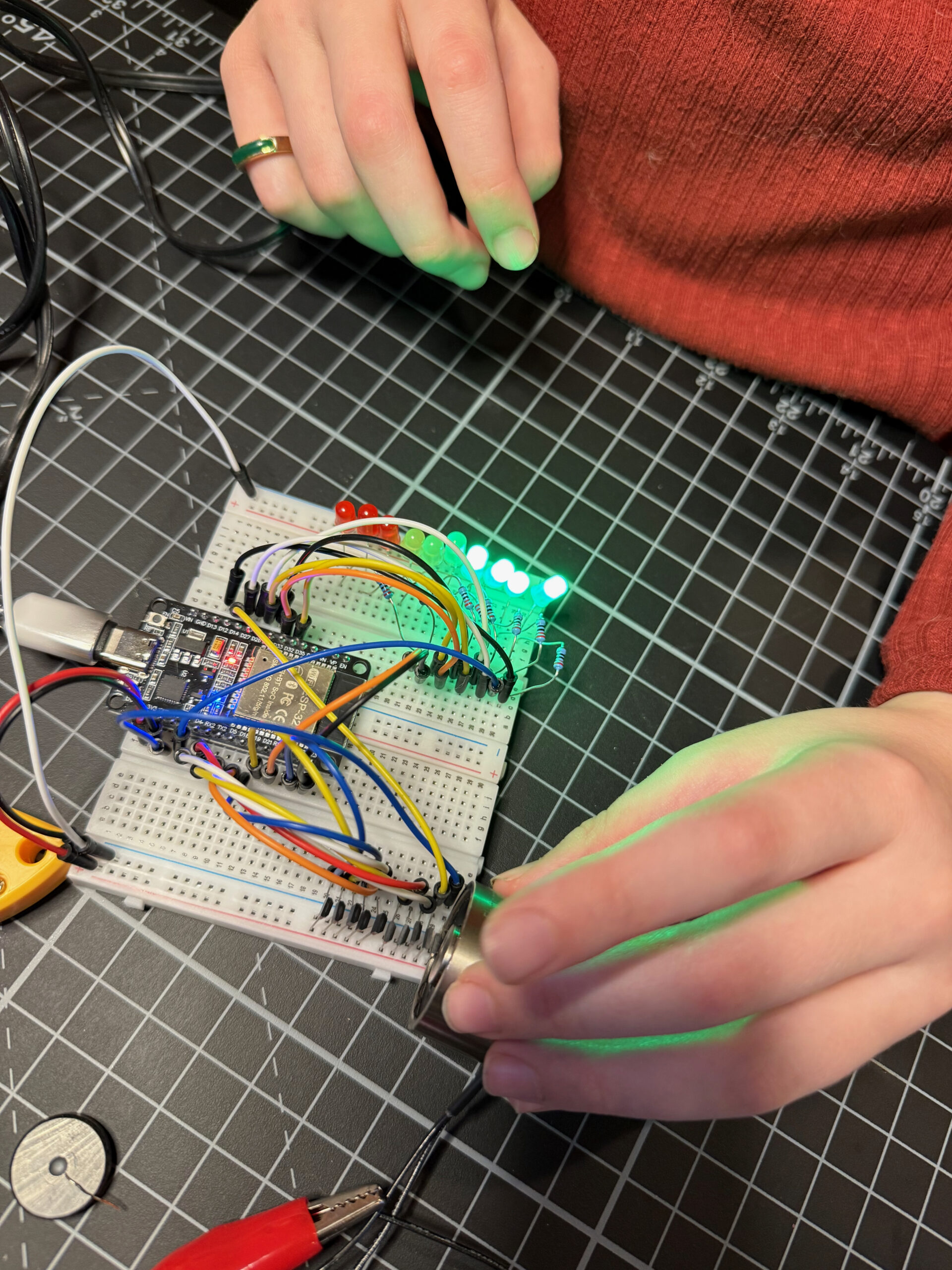
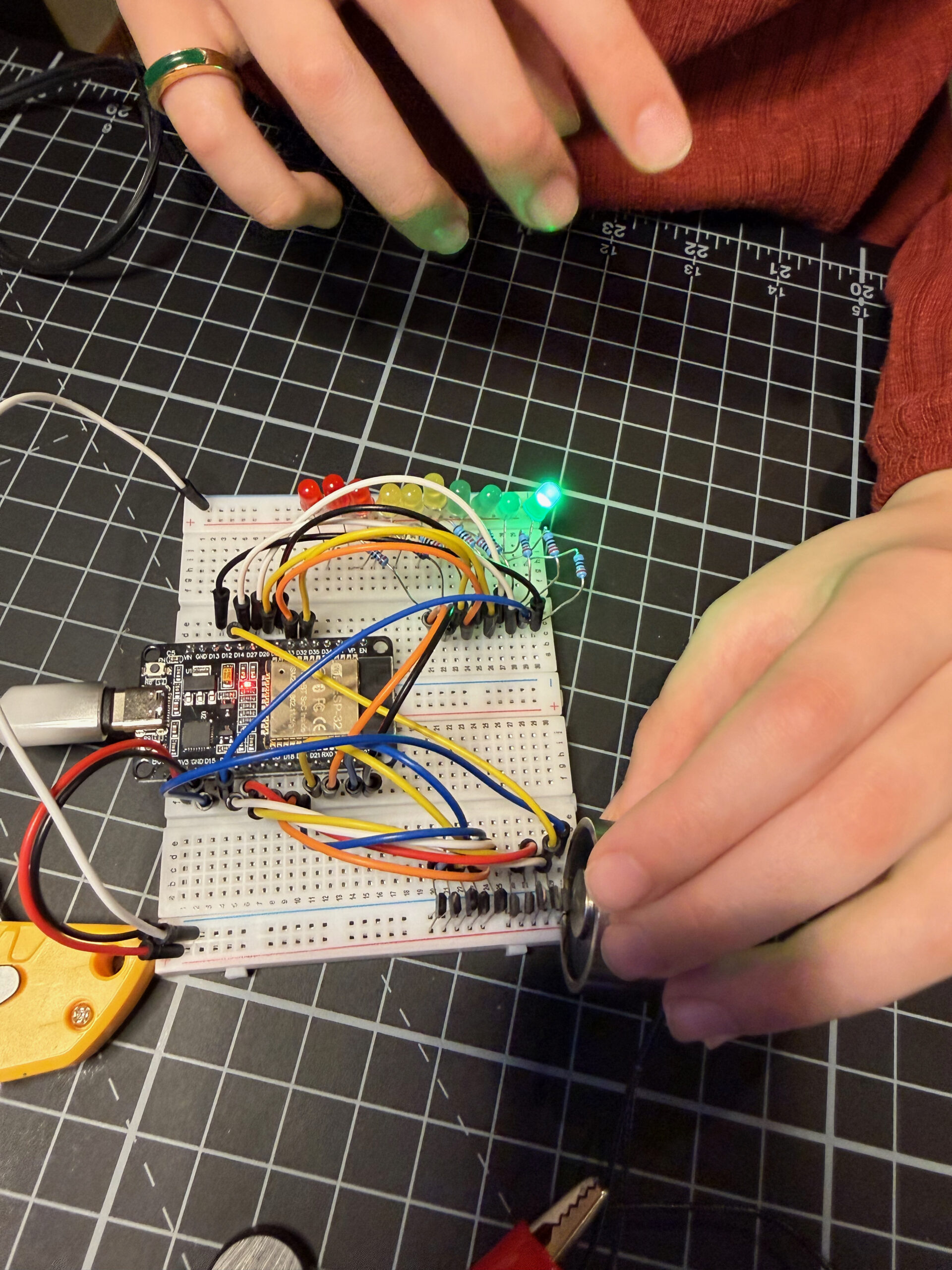
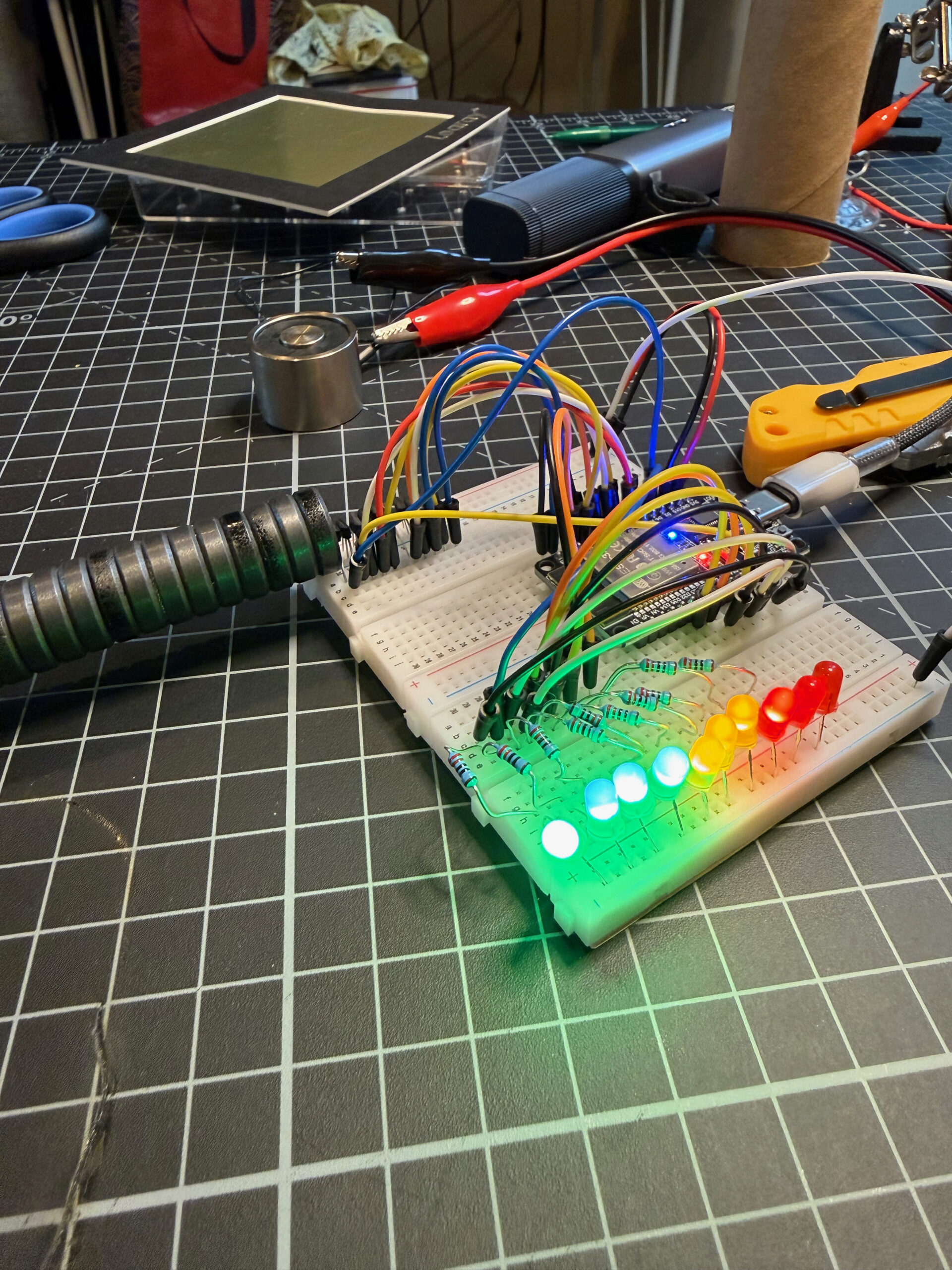
The big ring magnet pegs the meter.
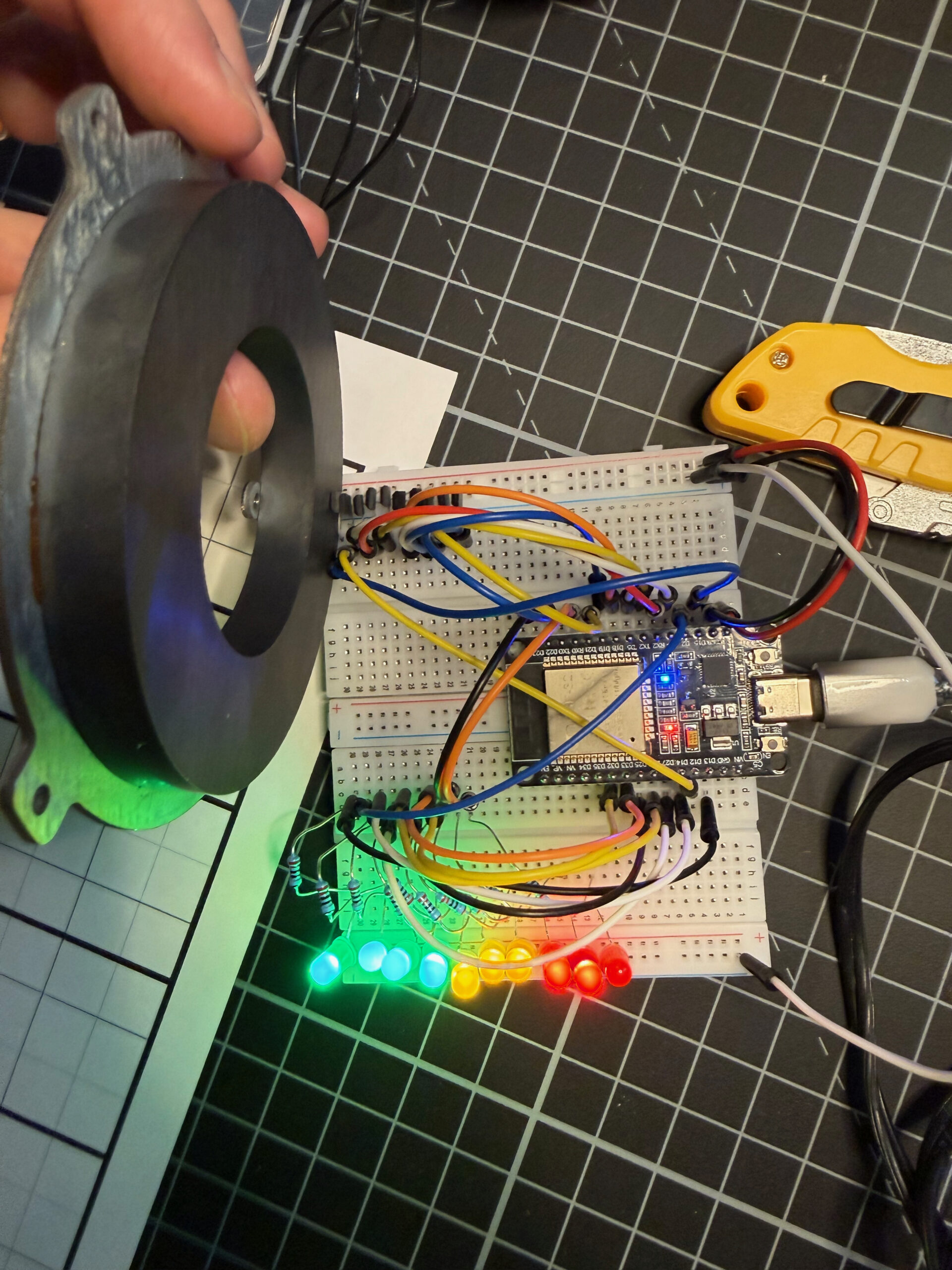
What he got out of it
Ryker didn’t need to know what an analog read or a bargraph mapping function was to feel like he
built something that worked. He got to wire it, debug it (we had a few LEDs in backward, classic), and
demonstrate it. The point of this kind of project, for me, is that the kid ends up with a real working object
they made themselves, not a kit, not a worksheet.