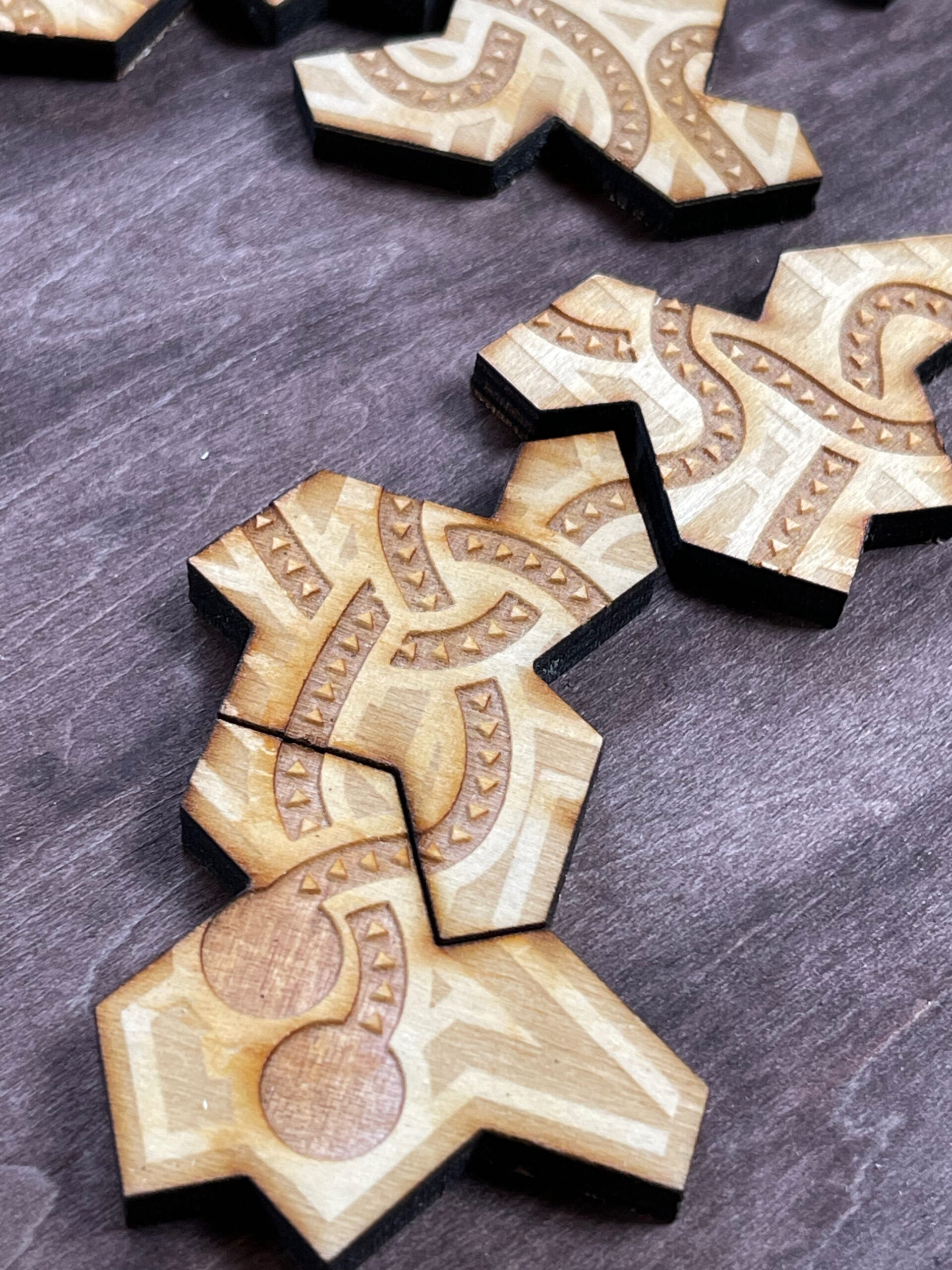
Description
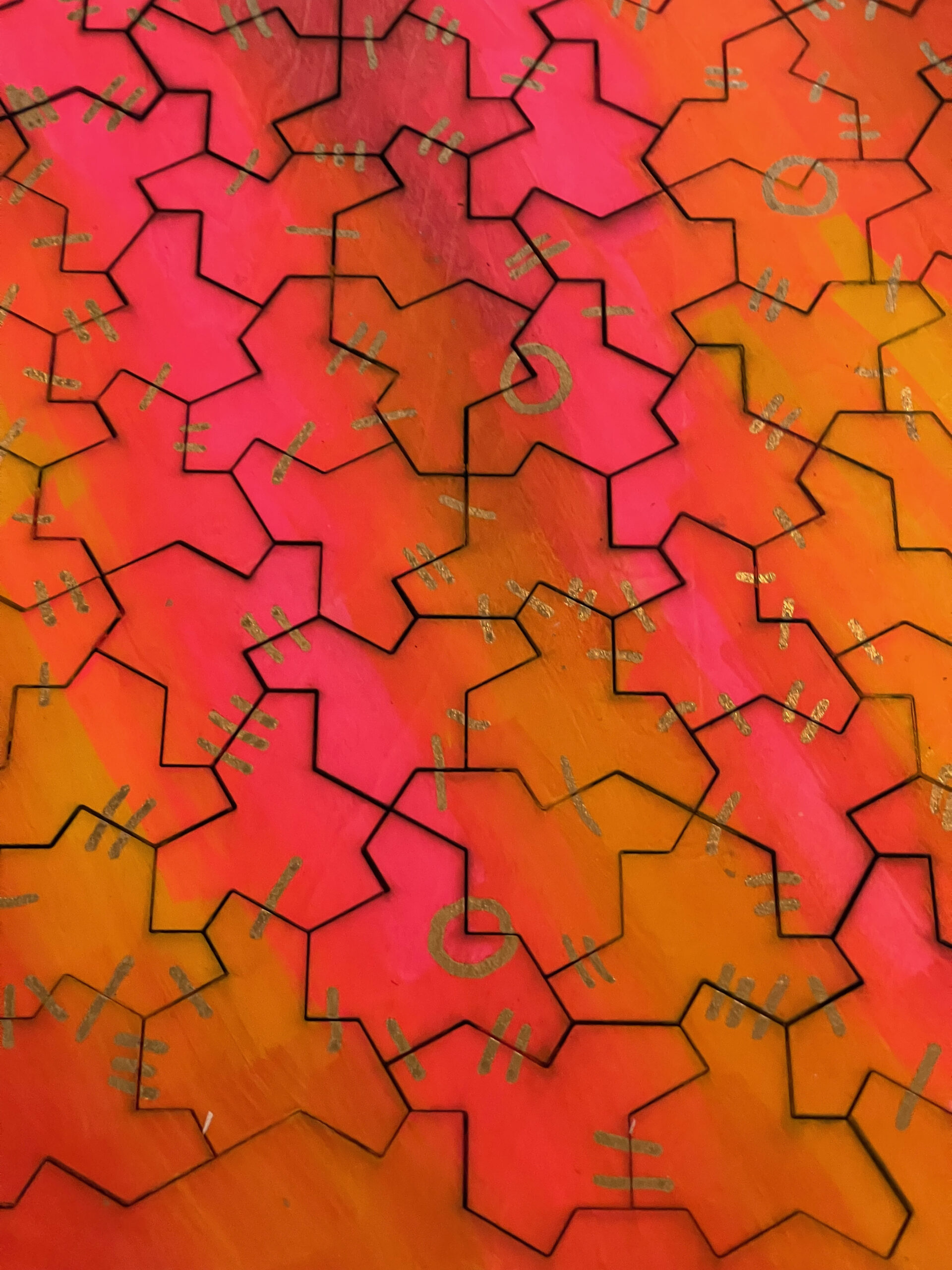
In 2023, mathematicians published the discovery of the “Einstein tile”, a single 13-sided shape, nicknamed the “hat,” capable of tiling an infinite plane without ever repeating. The name comes from the German “ein Stein,” meaning one stone. It resolved a problem open for decades: whether a single shape could force aperiodic tiling on its own.
The math was compelling on its own. What caught my attention was a secondary implication: if the tile placement never repeats, then any road network designed to connect across tile edges would produce a map that is also infinitely non-repeating. Every path would be unique. The map could never loop back on itself the way a city grid does.
The Concept
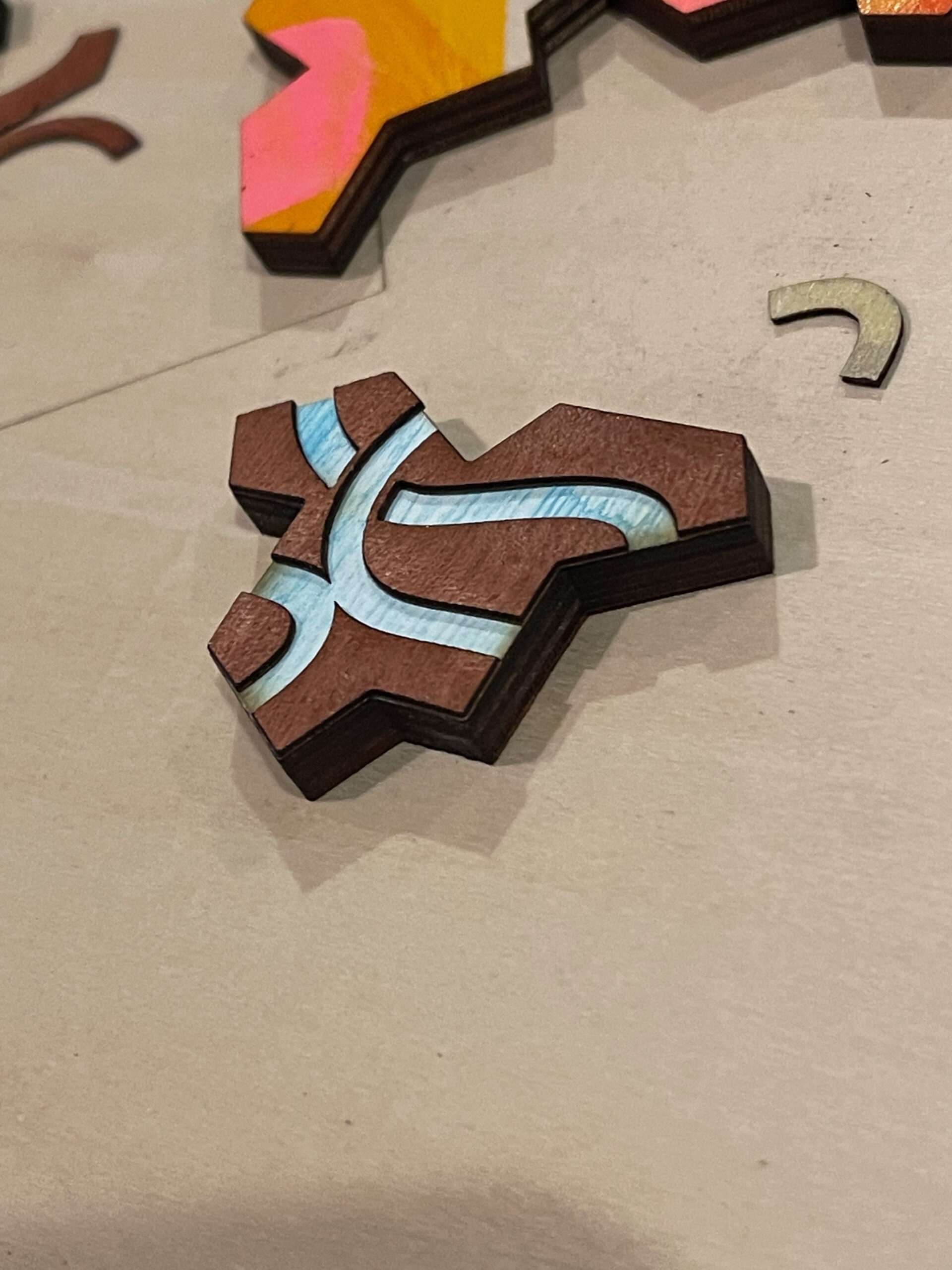
Each tile is engraved with a road network designed so that roads exit through specific points on each edge. When tiles are assembled in the Einstein aperiodic pattern, the roads connect seamlessly across boundaries, but because no arrangement of tiles ever repeats, the resulting map is always unique. Tile infinitely and you get an infinite, never-repeating road network: a map that could not have been planned, only grown.
Design & Fabrication
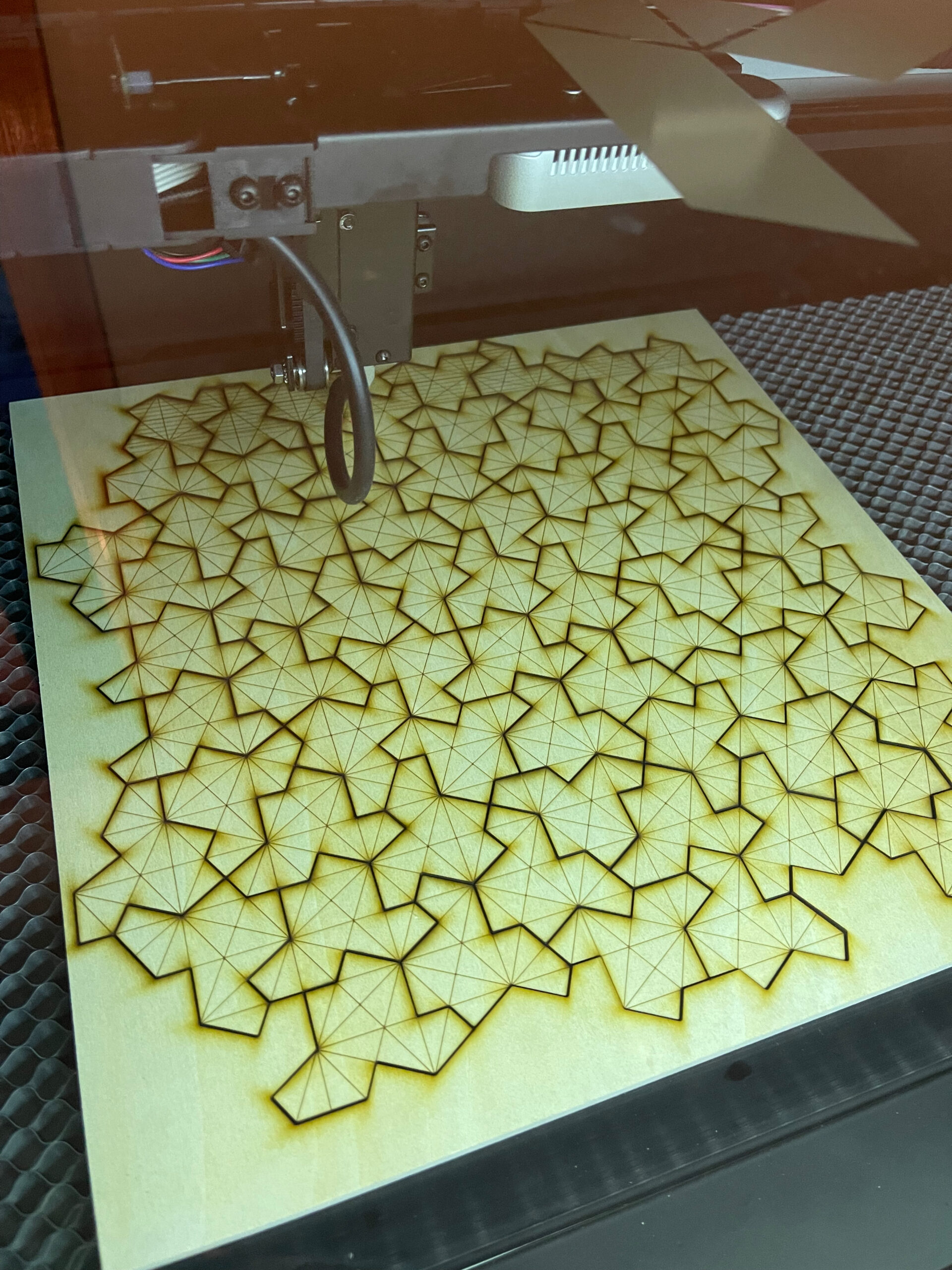
Road networks were designed in Illustrator, with careful attention to edge connection points so that roads would align correctly regardless of how adjacent tiles were oriented. Tile shapes were cut and roads engraved on a Full Spectrum Laser Muse 3D.
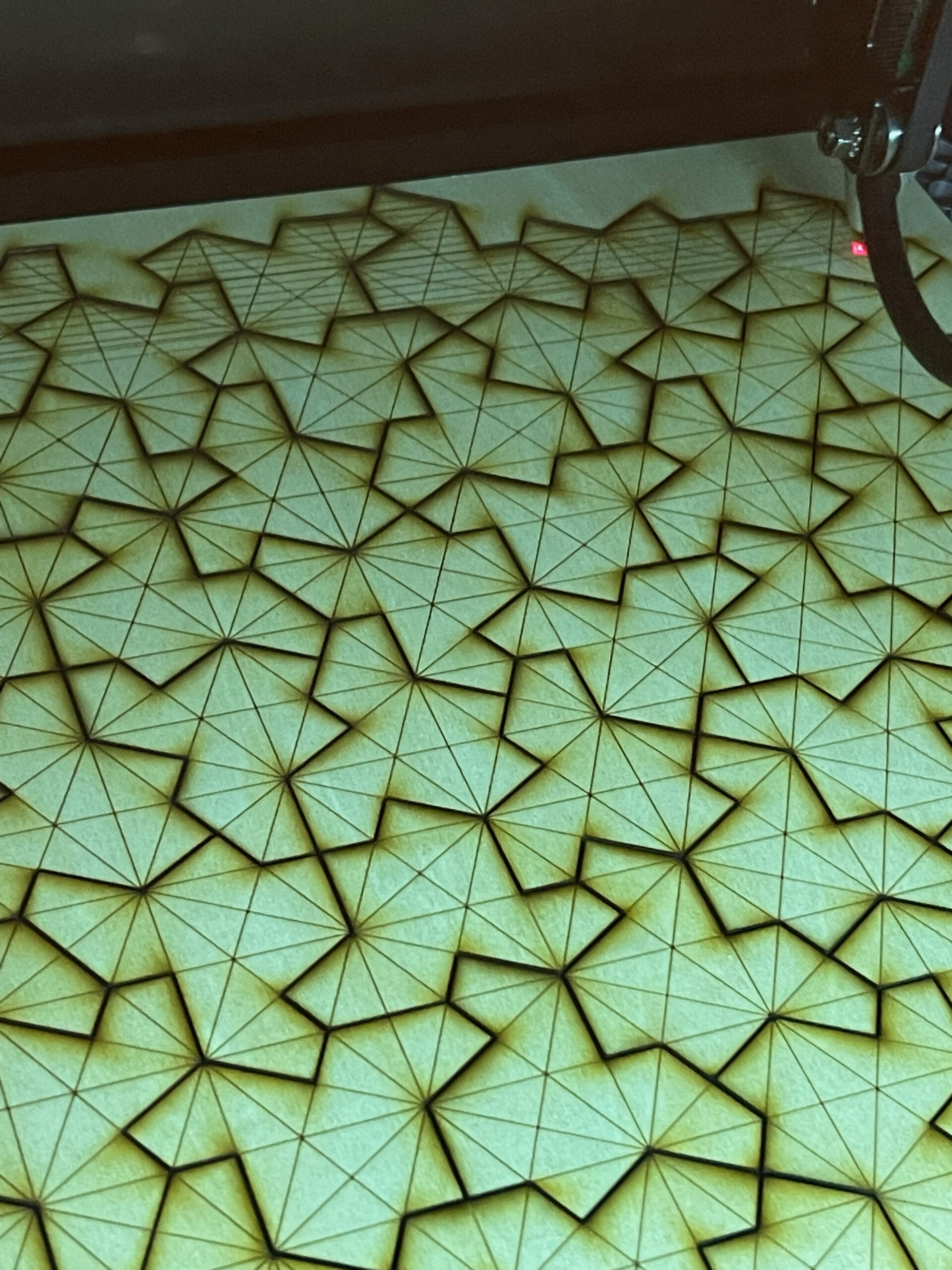
Iterations
The project went through several material and design iterations before arriving at the final version.
Acrylic
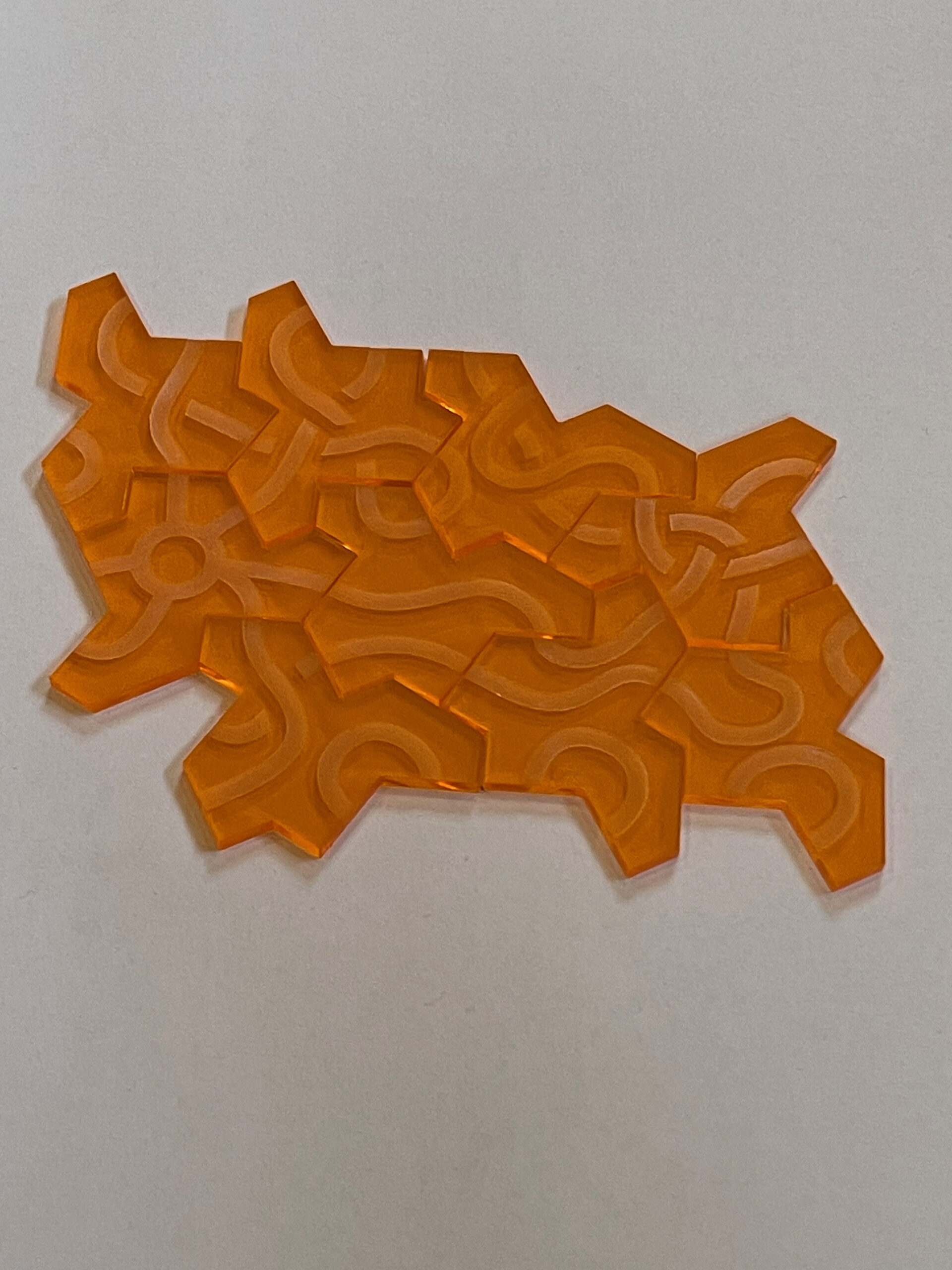
Early tests were run in transparent orange acrylic. The engraved road network reads clearly through the translucent material. A good proof of concept for the road connection logic, but not the final material direction.
Natural Wood
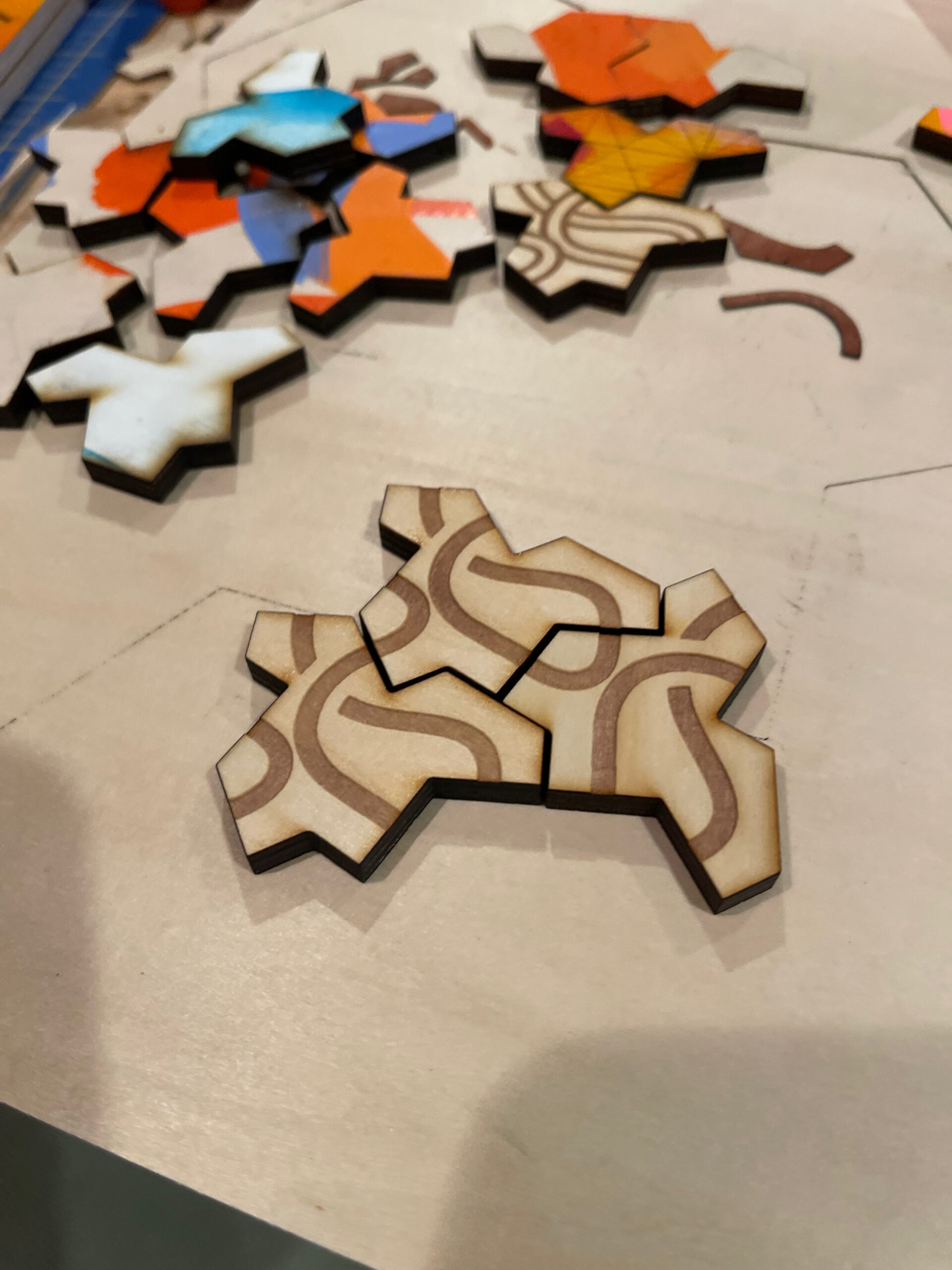
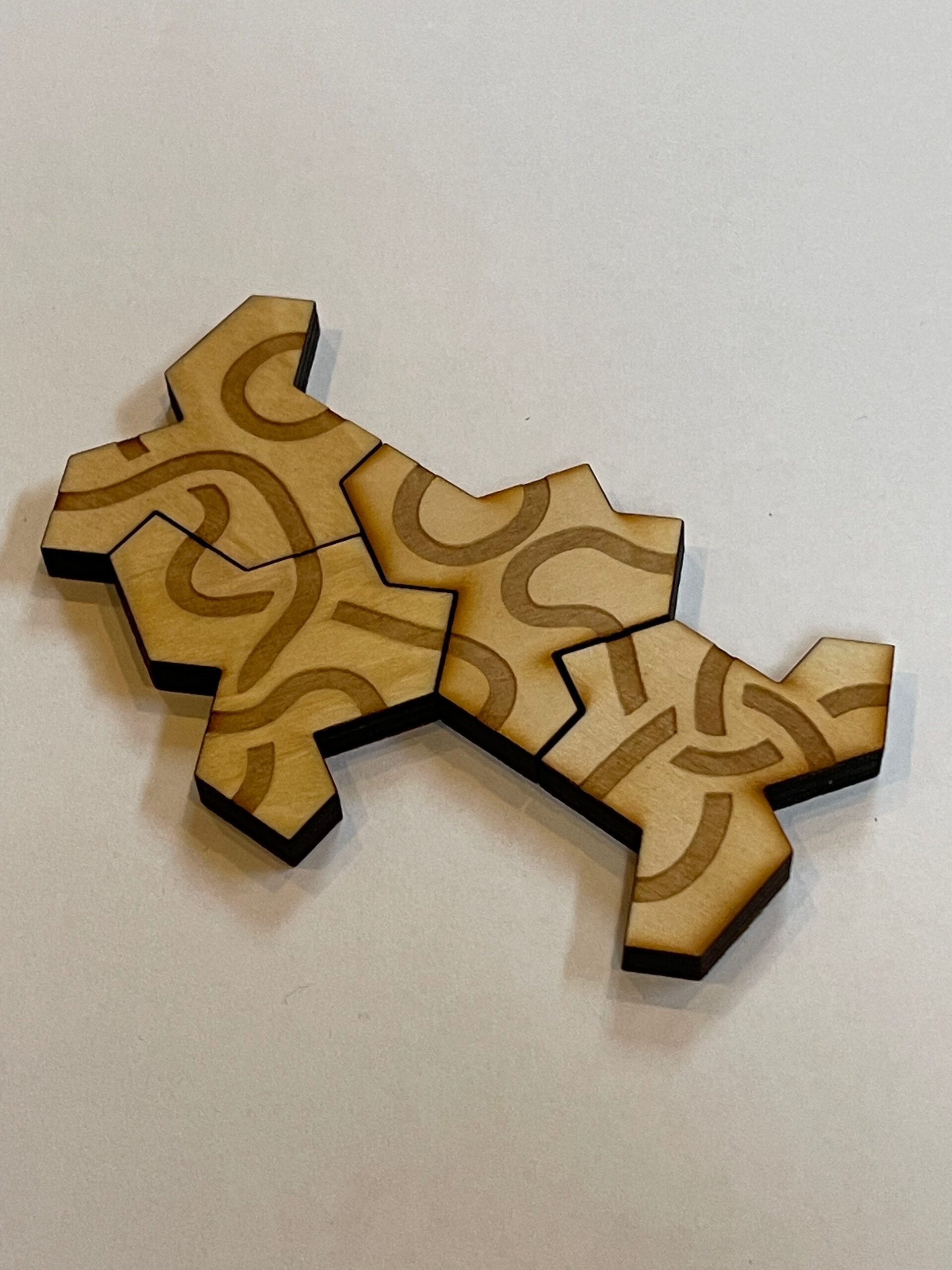
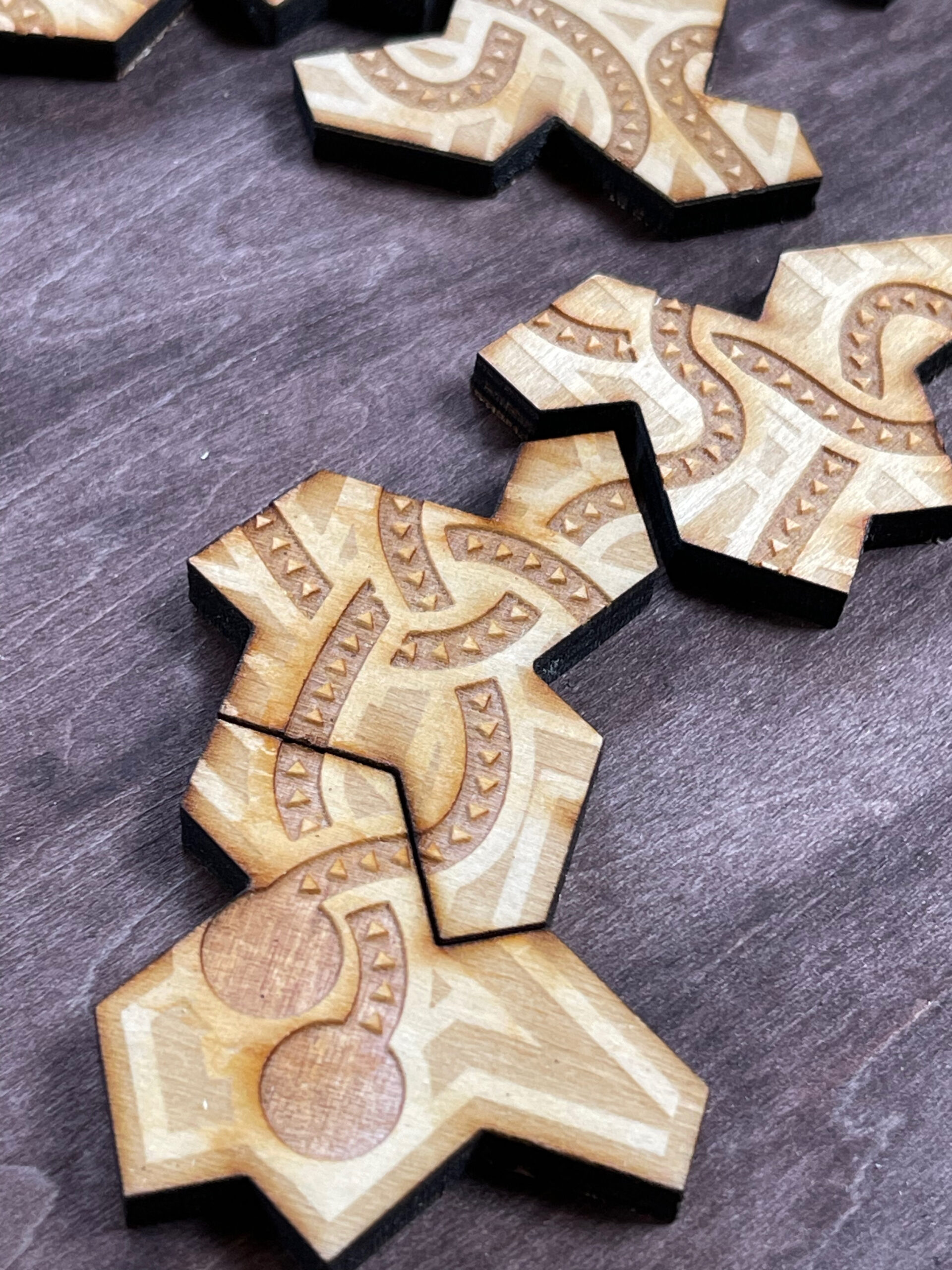
Moving to wood brought warmth and texture that suited the map aesthetic. The laser-engraved roads read as darker channels against the natural grain, giving each tile the feel of an aged cartographic object.
Painted Wood
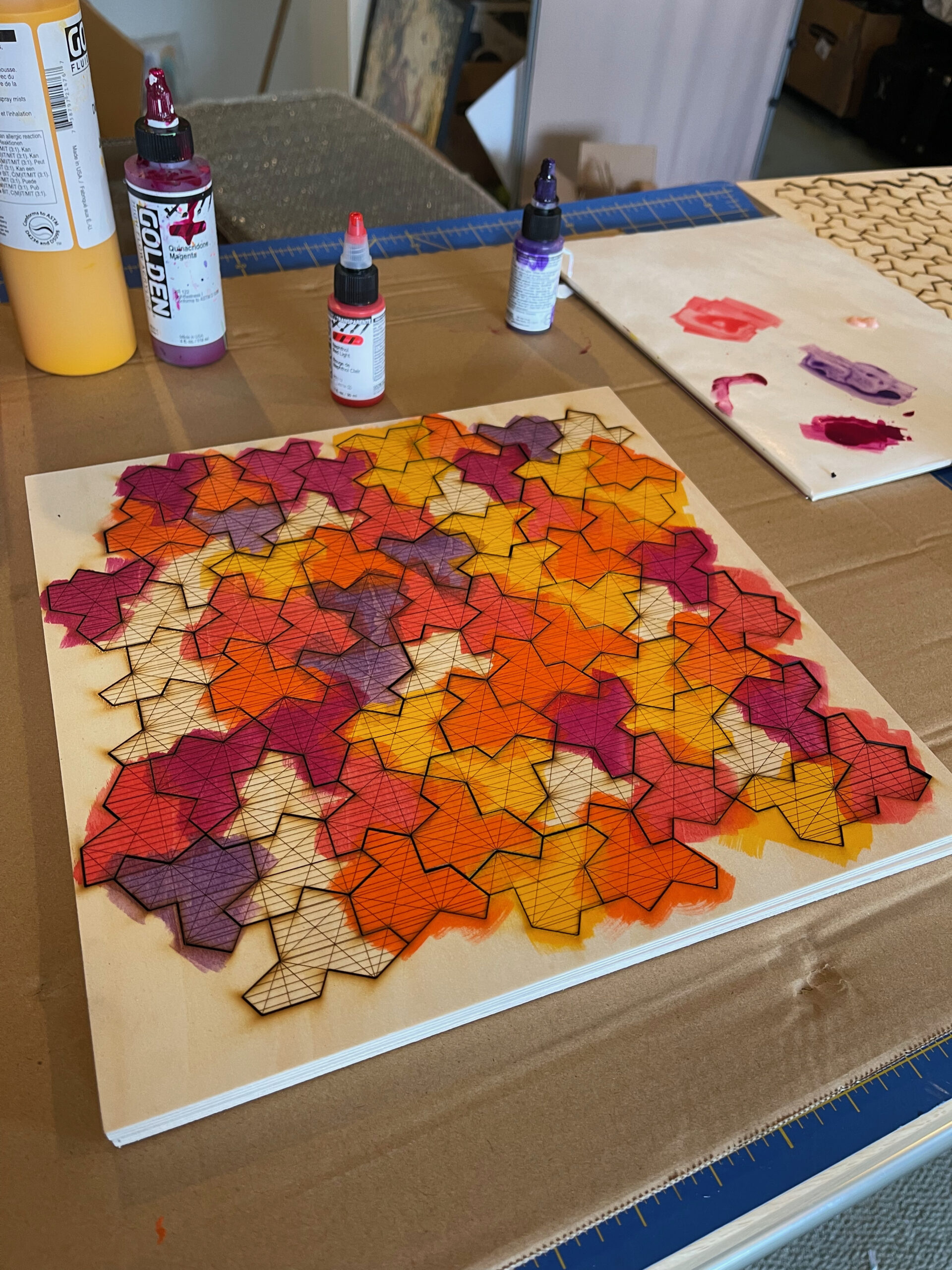
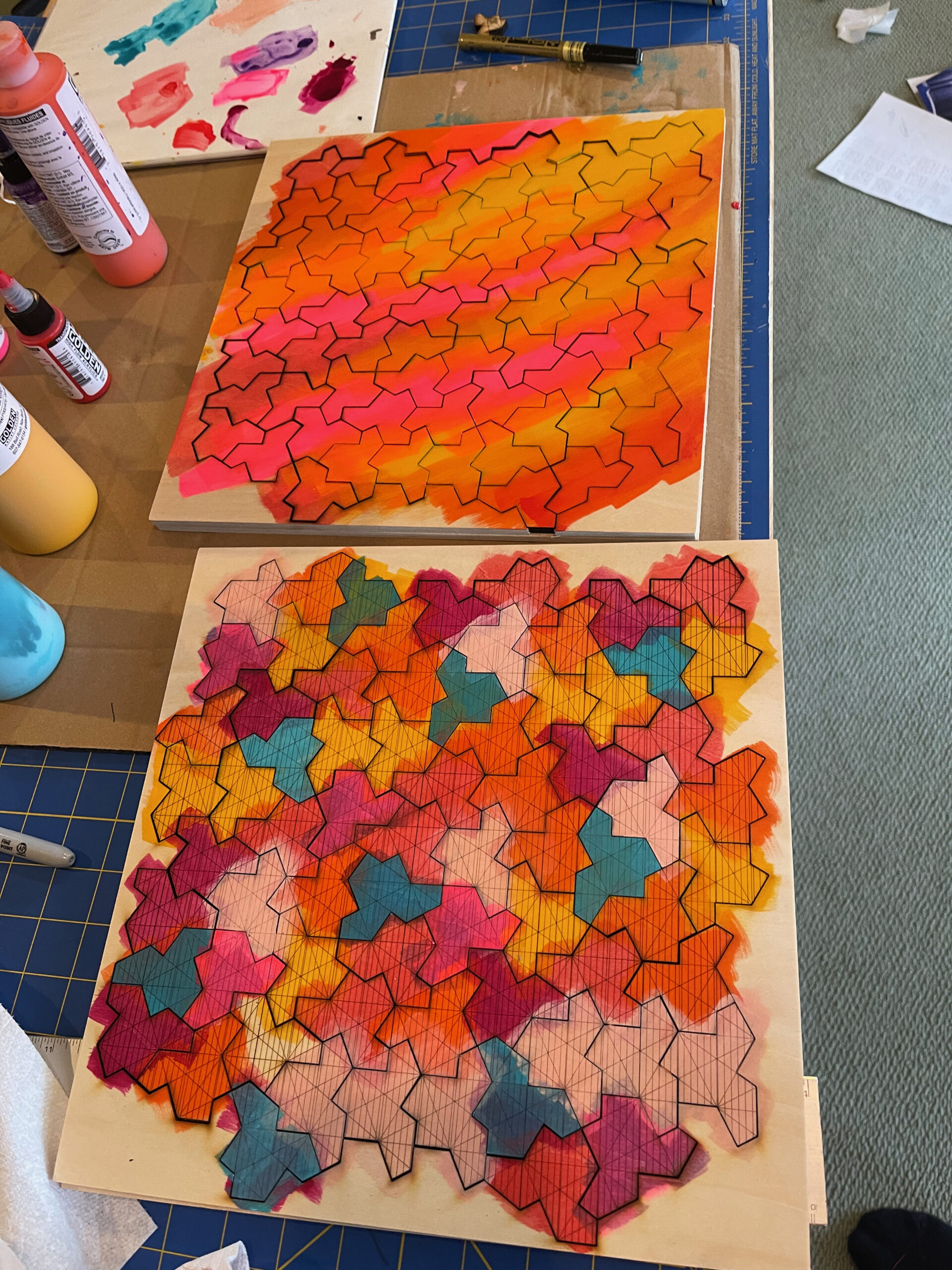
Tiles painted with Golden acrylics in warm gradients of orange, red, and pink. Assembled as a full panel, the color shifts across the non-repeating tile layout create a gradient that could never be entirely planned, it emerges from the arrangement.
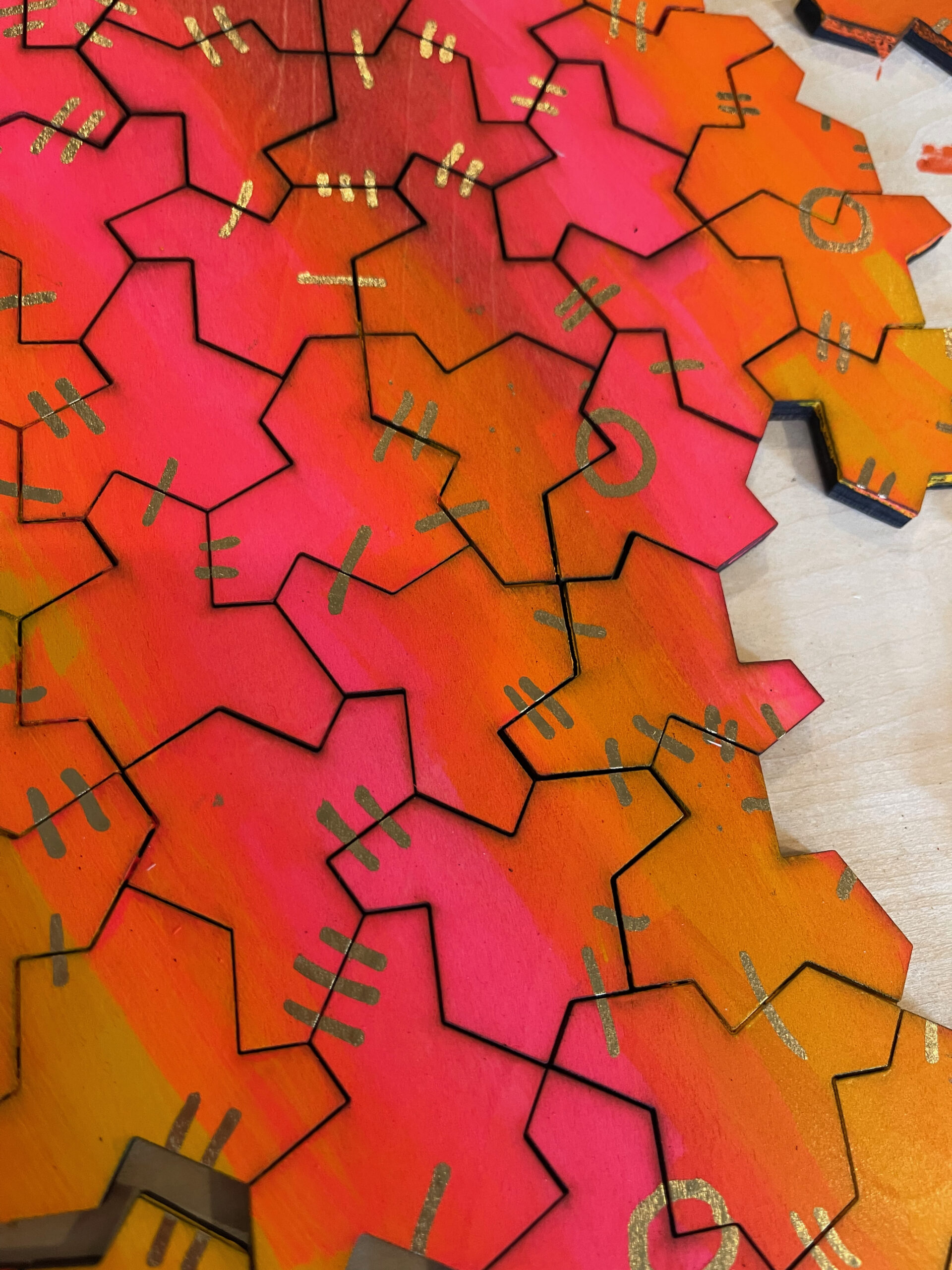
Final Version
The final iteration added two layers of practical design on top of the road network. First, shared markings that stretch across adjacent tile edges, unique symbols split between two neighboring tiles, giving a human assembler a puzzle mechanic to work with. Second, directional arrows embedded in each road segment, making the routing logic readable at a glance and providing a secondary reassembly cue: follow the flow.